Showing posts sorted by relevance for query atticus. Sort by date Show all posts

Wednesday, July 29, 2015

Making sense of 'Watchman' and 'Mockingbird'

Yes, of course, we were first in line for Go Set a Watchman, and we read the new Harper Lee novel eagerly and with great pleasure. We’ve also been following, mostly with delight, the coverage of the text, including Sophie Gilbert in The Atlantic, Isabel Wilkerson and Joseph Crespino in The New York Times, and Hadley Freeman in The Guardian.

Instead of weighing in on the novel generally, which is territory well-covered already by so many others, we thought we’d suggest a few ways in which teachers might integrate Watchman into their teaching of Mockingbird.

One of the biggest storylines about Watchman has been the discussion of Atticus as a racist. The mainstream media has covered this development in full sensational mode as if Atticus’s views about race are wholly surprising.

Careful readers of Mockingbird, however, have a sense of how complex the racial politics of Lee’s Maycomb world already are and that the Atticus of that novel is no simple hero. After all, Atticus takes on the defense of Tom Robinson involuntarily, telling his brother “I’d hoped to get through life without a case of this kind, but [Judge] John Taylor pointed at me” (117). He is no civil rights activist: before, during, or after the trial. When Tom is shot in the prison yard for supposedly trying to escape, and shot seventeen times(!), Atticus responds with care for Tom’s family and for the African-American community, but he doesn’t initiate any legal appeal or investigation.

Teachers can help students unpack some of the complexity of Mockingbird’s Atticus. In our Using Informational Text to Teach To Kill a Mockingbird, we offer an excerpt from David Margolick’s “To Attack a Lawyer in To Kill a Mockingbird: An Iconoclast Takes Aim at a Hero.” The piece critically evaluates Atticus’s words and actions, analyzing the ways in which his actions are not necessarily so heroic. Moreover, the discussion allows students to think about whether it’s appropriate to judge someone from the past – whether a real-life or fictional character – based on our cultural or social standards today.

With a nuanced and critical understanding of Mockingbird’s Atticus, students will be all the more ready to think about the Atticus we encounter in Watchman who says that the “Negro population is backward” (242) and questions whether “Negroes [belong] in our schools and church and theaters?” (245). Is this Watchman Atticus really incommensurate with the Atticus in Mockingbird who defends Tom Robinson but is fully part and parcel of a community in which African Americans live as wholly second-class citizens in every way?

Brief excerpts from chapter 17 of Watchman, then, together with Margolick’s text, can help students make more sense out of Atticus, and the complex world of the segregated South. As you work this summer to adjust your teaching of Mockingbird post-Watchman, take a look at our Using Informational Text to Teach to Kill a Mockingbird for the Margolick piece and others that can help flesh out that complex world.

Let’s help our students be smarter and more critically thoughtful than most of the mainstream media; it’s not that hard and it’s important, good work!

Tuesday, July 2, 2019

How Stevenson's Just Mercy illuminates injustice and Mockingbird

There’s a blurb on the cover of Bryan Stevenson’s Just Mercy: A Story of Justice and Redemption that compares Stevenson to Atticus Finch: “Not since Atticus Finch has a fearless and committed lawyer made such a difference in the American South. Though larger than life, Atticus exists only in fiction. Bryan Stevenson, however, is very much alive and doing God’s work fighting for the poor, the oppressed, the voiceless, the vulnerable, the outcast, and those without hope.”

As readers invested in thinking critically about the character of Atticus in TKAM and wary of the idea of Atticus as someone who “made such a difference in the American South,” this blurb strikes us as misleading, to say the least. Atticus, remember, did not strive to defend Tom Robinson, nor did he do so successfully. The idea that we celebrate this lawyer as some kind of hero of civil rights is a bit odd, no? (Stevenson himself notes this irony.)

But Stevenson’s book, his tale of his own work as a lawyer defending Walter McMillian, a native of Harper Lee’s Monroe County, forces the comparison in a way that is intriguing for readers of TKAM

First off, Walter, like Tom Robinson, grew up in one of the black neighborhoods outside Monroeville. While this community may have celebrated Lee’s novel, transforming an old, local courthouse into a “Mockingbird” museum and producing a local stage version of the novel, Walter’s story suggests that Lee’s ideas may not have been fully embraced. 

As Stevenson tells the story, when Ronda Morrison, the 18-year-old daughter of a white, wealthy family was found dead in 1986, Walter McMillian was arrested.

Walter had a few things going against him. He was poor and black. And he had engaged in an interracial, adulterous affair with a white woman.

Ultimately, all those factors play a role in this horrifying tale of injustice. There’s police misconduct, corruption, and incompetence. Unbelievable elements include the fact that Walter is placed on death row while he is a pretrial detainee. As Stevenson notes, this is “almost never done.”

The piece of Walter’s story that most resonates with TKAM is his conviction for this murder (no spoiler: this happens quite early in the otherwise quite suspenseful book). The connection with TKAM is the craziness of that conviction. Just as Atticus and everyone in Maycomb knows that Tom Robinson couldn’t possibly have choked Mayella with his damaged left arm, everyone in Monroeville knows (or should know) that Walter couldn’t have killed Ronda. On the day of the murder, he was at a fish fry at his house, with members of his family and at least a dozen church parishioners.

The ways in which law enforcement manufactures evidence, primarily through manipulating people to testify against Walter, is a fascinating piece of the story. And readers will be engrossed in Stevenson’s discussion of his own journey as a young lawyer and his broader fight to serve death-row inmates and address what he identifies as the injustice of poverty. 

But Stevenson draws one scene in his book that drives home the horror of Walter’s and Tom’s conviction – and in a way that Harper Lee does not capture. Stevenson, as part of his defense of Walter, goes to meet two dozen of his family members. We quote the passage at length, with some excerpting:

“It would have been so much easier if he had been out in the woods hunting by himself when that girl was killed.” Armelia Hand, Walter McMillian’s older sister, paused while the crowd in the small trailer called out in affirmation. . . . 

“At least then we could understand how it might be possible for him to have done this.” . . .

“But because we were standing next to him that whole morning . . . We knowwhere he was. . . . We know what he was doing!” People hummed in agreement as her voice grew louder and more distraught. It was the kind of wordless testimony of struggle and anguish I heard all the time growing up in a small rural black church. . . .

“We were with him all day! What are we supposed to do, Mr. Stevenson? Tell us, what are we supposed to do with that?”

Her face twisted in pain. “I feel like I’ve been convicted, too.”

The small crowd responded to each statement with shots of “Yes!” and “That’s right!”

“I feel like they done put me on death row, too. What do we tell these children about how to stay out of harm’s way when you can be at your own house, minding your own business, surrounded by your entire family, and they still put some murder on you that you ain’t do and send you to death row?” (92-93)

This passage about injustice in relation to a 1986 murder is so full of possibilities for readers of TKAM trying to think critically about Harper Lee’s meditation on injustice in relation to a rape in the 30s. Why doesn’t Lee include a scene between Atticus and the members of Robinson’s family and the broader black community in Maycomb after the conviction? What would that scene look like? What would Tom’s wife have said? How would Tom’s children have responded? How would their lives have been disfigured by the brutal injustice that not only took their father’s life but instilled in them the idea that they were also convicted?

What Stevenson does here, in a way that Lee does not, is to highlight how one miscarriage of justice is an act of terrorism enacted on an entire community. That’s the work that lynching was designed to do. A lynching wasn’t simply intended to punish one individual but to terrify a community. That’s why lynchings were such public, publicized spectacles: so the message of terror would spread far and wide. Tom escapes lynching in TKAM, thanks to Scout’s disarming interaction with her schoolmate’s father, Mr. Cunningham, but Tom’s death by seventeen bullets while in government custody surely has a similar chilling effect on the African-American community in Maycomb. 

Reading Just Mercy alongside TKAM underscores, one more time, the ways in which Scout’s blinkered perspective can’t or doesn’t expose the ugliest elements of Lee’s story. But with our students, by juxtaposing TKAM with an excerpt from Just Mercy, we can help our students do that work and see what Scout does not.

Monday, June 17, 2019

Thoughts on Furious Hours: Murder, Fraud, and the Last Trial of Harper Lee

We just finished reading the fascinating Furious Hours: Murder, Fraud, and the Last Trial of Harper Lee, by Casey Cep. 

Cep sets herself three tasks. In the first section of the book, she investigates and tells the story of Reverend Maxwell. The Reverend, an African-American preacher, army veteran, and pulpwooder, was accused and exonerated in the killing his first wife. In turn, he cashed in on several life insurance policies he had placed on her. In the years that followed, more people around the Reverend died, including the husband of his second wife, that second wife, the Reverend’s brother and nephew, and the daughter of his third wife. Each death was followed by numerous, often contested, payments on life insurance policies taken out by the Reverend on the now dead. The Reverend is a larger-than-life figure, feared in his community not just for his association with these many deaths, but for his rumored voodoo powers. The climax of this section of the book is the death of Maxwell, shot at close range at the funeral of his stepdaughter by her sister’s husband.

The second section of the book tells the story of Tom Radney, an equally complex character in his own right. Radney was a progressive state senator in 60s Alabama. His early career was marked by one pivotal moment: his decision to identify himself as an icon of the New South and to support Edward Kennedy (and not George Wallace) for the presidential nomination. Vandalism and death threats followed, and Radney withdrew from politics. In 1969, he reentered, running for lieutenant governor, but he was defeated. Cep notes that Radney may have been not ahead of his time but “ahead of his place” (100). He wanted to bring change to Alabama, but he didn’t end up doing so in the legislative arena. Instead, he made his career as a trial lawyer. His office, called the Zoo, served rich and poor, white and black, and he thrived. In fact, Radney successfully defended the Reverend in the only murder charge he faced, for the death of his first wife, and worked to secure payment for the Reverend in his many disputed insurance claims. The climax of this section is Radney’s successful use of the insanity defense to secure exoneration for Robert Burns, the Reverend’s assassin.

The last section, and the one many English teachers and readers of Mockingbird will be most interested in, is the story of Harper Lee and her apparently unsuccessful attempt to write the story of the Reverend and Radney. Cep writes of Lee’s refusals of celebrity and conventionality, of her deep intellectualism and curiosity, and of difficult relationship with writing. In particular, Cep focuses on the ways in which Lee’s scrupulous dedication to accuracy, in contrast to Truman Capote’s practice with In Cold Blood, presents unique challenges: an absence of facts, self-serving memories by those involved, and confounding protagonists. Ultimately, for reasons that we may never fully understand, Lee seems to have found herself unable to write this story.

One moment in the final section is particularly striking in light of the persistent and thoughtful conversations about the politics of Mockingbird. Cep writes of Lee’s editor, Tay Hohoff, and her insistence that it would be “best to convert readers to the cause of racial justice with a child’s loss of innocence [rather] than to condemn them through the disillusioned voice of an adult daughter” (179). Hence the shift to the narrative voice of Scout, in Mockingbird, and away from the adult perspective of Watchman. In Watchman, Atticus is condemned by his daughter as a member of the White Citizens’ Council. In Mockingbird, Scout’s ability to criticize her father’s accommodationism and political complacency is limited by her age and her inability to see outside the world of Maycomb and the courthouse.

In an otherwise carefully nuanced and researched book, Cep states blandly that Atticus in Mockingbird remains “heroic forever” (178). It’s disappointing to see Cep render this simplistic reading of Atticus. Certainly she’s in good company. Mockingbird was received and canonized, just as Hohoff had hoped it would be, as “a redemptive story of tolerance” (178). The film version, probably more well-known in our culture, particularly for those who never actually read the book, bolsters this view of Atticus as heroic and the book overall as redemptive. (Teachers can find resources for undertaking a more complex consideration of Atticus in our volume on Mockingbird.)

Of course Tom Robinson, shot in the back seventeen times, does not receive redemption, and Atticus himself issues an ominous warning, not of redemption but of retribution: “Don’t fool yourselves—it’s all adding up [racial injustice] and one of these days we’re going to pay the bill for it.” The violence enacted on Scout and Jem at the end of the novel hints at exactly the kind of bill-paying to come in a society that complacently looks away from the brutality in its midst.

Perhaps Lee’s vision of the South was more complicated than the “palliative plot” (178) she, under the guidance of Hohoff, found herself telling as she transformed the story of southern racism in Watchman into Mockingbird. Was Lee’s attempt to take on the story of the Reverend her way of rejecting Hohoff’s politics and her own compromises? Certainly, taking on the tale of a black Alabama preacher who worked the insurance system to make himself a fortune and may or may not have murdered his family along the way, could not have been a more challenging choice for the author of the much-beloved Mockingbird.

Would the world have welcomed this sort of book from Lee? The vitriol surrounding the publication of Watchman probably suggests the answer.

In any case, Casey Cip has taken up Lee’s mantle, and we have Furious Hours. For those of us who find Lee, Mockingbird, and Watchman to be intriguing, complex pieces of the story of American literary and cultural history, the plot thickens.

Sunday, January 15, 2017

Invoking Mockingbird, Obama reminds us of importance, difficulty of empathy

In his Farewell Address on January 10, 2017, President Obama once again charmed and pleased many English teachers across the United States with his reference to Atticus Finch and To Kill a Mockingbird.

In case you missed the moment, Obama said, “if our democracy is to work in this increasingly diverse nation, then each one of us need[s] to try to heed the advice of a great character in American fiction – Atticus Finch – who said, `You never really understand a person until you consider things from his point of view … until you climb into his skin and walk around in it.’”

This passage, a favorite for many teachers, comes at the beginning of Chapter 4, when Atticus describes the practice of climbing into another’s skin, or what we might today call radical empathy, to Scout as a “simple trick” (39). The current political moment suggests there is nothing simple about it.

Indeed, Obama acknowledges in his Address the difficulty and rarity of this act of empathy. He presses Americans to “pay attention, and listen … acknowledging that the effects of slavery and Jim Crow didn’t vanish in the ‘60s.” Obama insists that we also need to work to tie the “struggles for justice to the challenges that a lot of people in this country face … [including] the middle-aged white guy who, from the outside, may seem like he’s got advantages, but has seen his world upended by economic and cultural and technological change.”

The allusion to Mockingbird seems a perfect exemplar for Obama’s point and for our current political moment. Tom Robinson and Calpurnia live in a desperately unequal world. In Maycomb, their lives are simply worth less; they are disempowered and dispossessed.

But so too is Mr. Ewell. Scout as narrator in Mockingbird explains that the “families like the Ewells” (227) inhabit every town like Maycomb. They are people left behind by both good times and bad: “No economic fluctuations changed their station – people like the Ewells lived as guests of the county in prosperity as well as in the depths of a depression” (227).

Just as Atticus never really steps into Tom Robinson’s skin and imagines the world from his point of view, the plight of the Ewells, who actually live in “what was once a Negro cabin” (227), is never tied together by anyone in Maycomb as part of a broader struggle for justice in the novel. One might say that the two disempowered characters live in their separate bubbles, until their worlds collide. Mr. Ewell is the antagonist, of course, but both characters suffer, disproportionately of course, from their place in the world of Maycomb in which they are not seen by the broader society or by each other.

Obama’s Address asks us to do what is definitively NOT a simple trick: to see each other and all those who are interconnected with us; to listen to each other and have real dialogue, rather than stay in our bubbles or snipe at each other over social media.

For those of us teaching Mockingbird, this is one more moment in which we can use informational text – in this case Obama’s Address – to show students the relevance of the literary texts we teach and to cultivate in our students the skills, disposition, and courage to become engaged, informed citizens. 

Friday, January 26, 2018

The importance of teaching students to read against canonical texts like Mockingbird

Periodically, on NCTE’s Connected Community, in our hallways, at conferences, and sometimes in our classrooms, we have one persistent and difficult conversation. How do we balance teaching canonical literature on the one hand and offering our students, on the other hand, what Latrise Johnson describes as “texts that include diverse characters but also . . . are reflective of students’ rich and complex histories”? This debate seems to surface, in particular, around To Kill a Mockingbird. Most recently, Will Menarndt argues in “Forget Atticus” that we should stop teaching TKAM.

Mockingbird has a long history of being lauded; Oprah has called it “our national book” and recent research suggests that many (white) teachers use TKAM to address multicultural issues, particularly race and racism (Macaluso 280). Depending on how that work is done with TKAM, particularly if we are spending the majority of our time highlighting the “obvious and overt racism” (Macaluso 282) in Harper Lee’s novel, we may be in danger of telling what Chimamanda Adichie warns against: the single story. Obvious and overt racism have been and remain only part of the complex story of racism. Students need to deepen their understanding of the institutional and structural racism that pervades Maycomb – in its housing, schools, and employment opportunities. The issues that Tom Robinson encounters with Maycomb’s justice system, like the lynch mob, are just the tip of the iceberg.

TKAM can be taught fruitfully in relation to that broader story of racism, and many teachers, before and after the publication of Go Set a Watchman, were doing that important work: complicating and troubling the dominant narrative of Atticus as the white savior and Tom as the voiceless, crippled, black victim. Michael Macaluso offers a thoughtful example of that work in his discussion of the lynch mob scene at the jailhouse. Reading against TKAM, for Macaluso, offers students the opportunity to see Atticus’s racism, even in this moment of defense of Tom Robinson, as “evidence of how racism works through privilege . . . and how it is laced into institutional and cultural practices and behaviors” (285).

This practice of reading against the text, particularly when the text is a canonical staple and as such has been central to reifying our dominant ideologies, is what Carlin Borsheim-Black, Macaluso, and Robert Petrone call critical literacy pedagogy (CLP): an approach that “teaches students to read and write against texts and understand that language and texts are not neutral and always ideological” (123).

Using CLP to read TKAM, in other words, reveals a text that on the one hand offers an anti-racist message but on the other hand is bound up with and in concert with a fundamentally racist ideology. This may be what Borsheim-Black, Macaluso, and Petrone call a dissonant realization for students, but it’s an important pedagogical opportunity.

We need to continue to do the important work of welcoming different voices into our classroom and to be sure that our literary curricula change to reflect our current student body. And surely it’s time for us to leave behind the idea that TKAM is an ideal vehicle for a complete and comprehensive discussion of the vast and complex issues of multiculturalism, race, and racism today.

Still, we need to recognize the cultural capital of Harper Lee’s novel: it continues to be idolized and adored (Macaluso 286) in our broader culture. Teaching TKAM, using the CLP model to read both with and against this text, allows students to discover for themselves the ideological complexity of this American novel.

We offer our model of text clusters and companion texts (our series with Rowman and Littlefield) as a productive component of CLP. Reading excerpts from Haywood Patterson and Earl Conrad, two of the Scottsboro boys, about their experience with a lynch mob, students can see for themselves what’s left out of the near-lynching scene in TKAM. Loving v. Virginia makes visible the legal and institutional racism that forces Dolphus Raymond’s to feign drunkenness in order to protect his mixed-race family. An interview with white women who grew up with black domestics in the 30s, particularly when paired with excerpts from an interview with Dorothy Bolden, an African-American woman who worked as a domestic in the 1930s South and founded the National Domestic Workers Union, can unpack and unsettle the representation of Calpurnia.

After all, what really matters is not whether our students can read TKAM as racist or anti-racist but whether we are preparing our students to be powerful and resistant readers of the many texts of our world, including those canonical texts that occupy positions of outsized ideological power.

Works Cited

Adichie, Chimamanda. “The Danger of a Single Story.” TedGlobal. July 2009, Lecture, https://www.ted.com/talks/chimamanda_adichie_the_danger_of_a_single_story.

Borsheim-Black, Carlin, Macaluso, Michael, and Robert Petrone. “Critical Literature Pedagogy: Teaching Canonical Literature for Critical Literacy.” Journal of Adolescent & Adult Literacy, 58.2, Oct. 2014, pp. 123-133.

Johnson, Latrise. “Students Don’t Need Diverse Literature Just Because It’s Diverse.” NCTE, 12 April 2016, http://www2.ncte.org/blog/2016/04/students-dont-need-diverse-literature-just-diverse/.

Macaluso, Michael. “Teaching To Kill a Mockingbird Today: Coming to Terms With Race, Racism, and America’s Novel.” Journal of Adolescent & Adult Literacy, 61.3, Nov./Dec. 2017, pp. 279-287.

Thursday, January 16, 2014

Using Informational Text in the Classroom: Atticus and the 'Case for Unpopular Clients'

In late December, we used some of our material with a 9th grade class at Secaucus High School. The students had read through chapter 24 (when Scout, during Aunt Alexandra’s missionary circle, learns that Tom Robinson has been killed in prison). We decided to work with them using our unit based on Stephen Jones’ 2010 piece from the Wall Street Journal: “The Case for Unpopular Clients,” which appears in our forthcoming book, Using Informational Text to Teach to Kill a Mockingbird, available from Rowman & Littlefield Education in March. (This unit isn’t available online, but you can see and download two other Mockingbird-based units at www.usinginformationaltext.com.)

Jones defended Oklahoma City bomber Timothy McVeigh, and his editorial is a heartfelt defense of the lawyers working with detainees at Guantanamo Bay. The piece is ripe with connections to Mockingbird, but it’s challenging because it articulates a complex argument, uses advanced vocabulary, and assumes a relatively large amount of background knowledge.

The Secaucus 9th graders, however, showed how much they could do in a fifty-minute period!

We opened the period with a quick video clip from YouTube. The students, after all, had no idea what Guantanamo Bay is, so they had no way of thinking about the issue of defending the accused terrorists there. The one-minute clip about the trial of the driver for Bin Laden (whom they had heard of) gave them some context. In a quick discussion after the clip, the students asserted that really guilty people shouldn’t necessarily get a lawyer because this might allow them to get off. We talked a bit about how you would know whether someone was really guilty without a trial and that shook their confidence, but we didn’t yet raise the issue of the importance of a trial for all defendants.

Next, we moved to some vocabulary exercises. Although we suggest you begin the vocabulary work with context clue activities, we started with vocabulary skits in part because we were visiting the class and wanted to build in some immediate fun and goodwill. The students responded well although they struggled, as can be expected, with parts of speech, confusing, for example, adversarial and adversary. (This unit is not available online, but other sample units showing the range of our vocabulary materials from our Using Informational Text to Teach To Kill a Mockingbird can be found at www.usinginformationaltext.com.)

We did a few more vocabulary exercises, using only those that involved context clues since we didn’t want to spend the time focusing on dictionary skills and use. The work was painless and engaging and allowed us to begin to set the stage for some of the issues in Jones’s piece.

After about 20 minutes of prep work, we got to the meat of our work: reading through and discussing Jones. We read together, using the sidebar discussion questions we had placed alongside the excerpt to chunk the text, probe understanding, and draw connections with Mockingbird. The first paragraph of the article references Timothy McVeigh, whom the students hadn’t heard of, but that same paragraph lays out pretty simply how brutal his bombing of the Federal Building was. As Jones sketched out his reasons for defending McVeigh, students were able to deepen their understanding of the American justice system, appreciating Jones’s willingness to defend a guilty and unpopular client, noting the similarities to (and difference from) Atticus and Tom Robinson, and rethinking the importance of a zealous defense for all accused (and refining their earlier opinions about Bin Laden’s driver). A particularly great moment was when the students considered how comparatively well Atticus had been treated by his community given his unpopular defense work. Jones notes death threats and armed guards at his home; when the students continue on and read to the end of Mockingbird and the attack on the children, they will be able to reflect back on their preliminary assertions.

In all, the fifty minutes of class was wonderfully successful in getting them to think about the continued relevance of the issue of a fair defense for all. The students read difficult text, learned some new words, and thought carefully about some tough issues. We didn’t get through everything (and perhaps could have cut the text into a smaller chunk that served the singular purpose of our one class period), but reading Stephen Jones’s informational text allowed the students to flex their reading and critical thinking muscles while also delving deeply into Mockingbird.

Thursday, February 12, 2015

Why Mockingbird and Harper Lee's new novel matter

Audrey had the opportunity to speak on Al-Jazeera America’s daily news discussion show Inside Story with Ray Suarez on February 9. The occasion for the segment was the announced release of Harper Lee’s new novel, Go Set a Watchman, due out in July 2015 from HarperCollins. Audrey was part of a panel, including Lee biographer Charles Shields and Los Angeles Times writer Carolyn Kellog. (We’d love to share the video, but, unfortunately, Al-Jazeera can’t make it publicly available due to its cable agreements.)

The new novel is a big story for a range of reasons, including the fact that Lee has been a literary recluse. To Kill a Mockingbird is a widely beloved text, so many, many readers are thrilled about this publishing event.

During the program, Ray asked Audrey about the fact that Mockingbird continues to be so widely read and taught. It’s a curious phenomenon. Why do some texts become canonical? Why do teachers continue to teach certain texts year after year, and in this case generation after generation? Perhaps it’s because Atticus represents, in some ways, the best of what we want to imagine about America: a just, courageous man willing to stand up despite public opprobrium.

But, let’s be clear. Atticus’s heroism isn’t so simple. Remember, he doesn’t volunteer to defend Tom Robinson; he’s unequivocal about the fact that he doesn’t want the case: “I’d hoped to get through life without a case of this kind, but [Judge] John Taylor pointed at me and said, `You’re It.’”
Mockingbird may offer us the attraction of a fairly simple story of good and bad. Tom Robinson is good; Bob Ewell is bad. Issues of race are usually a lot more complicated than that and can be a lot harder to navigate.

A skilled teacher can unpack many of the nuances in Mockingbird, but it isn’t easy. Why does Lee make a point of including Walter Cunningham in the group of men who set out to lynch Tom Robinson? How does Cunningham’s presence in this group and his willingness to be talked down from the brink by Scout relate to his social status as a proud man, caught up in the economic tangle of an entailment and the Depression? What are we to make of Lula, the combative African-American woman who confronts Calpurnia and makes clear that the Finch children are not welcome at the African-American church?

For a skilled teacher, this is a fascinating text full of complexity about race and many, many issues.

The bigger point, however, is that teaching literature is always hard. Whether we are teaching Mockingbird or any other text, it’s not easy to get students to make connections and care about the text. If we forget to ask ourselves why we are teaching these texts and why they matter, how can we expect our students to be able to do the same?

For us, the informational text mandate of the Common Core is the welcome reminder we need. When we think about what kinds of informational text connections we want to make with Mockingbird – for example, to the issue of lawyers willing to defend the detainees at Guantanamo – we make clear, for ourselves and our students, why this text still matters.

Meanwhile, we are super curious and excited about what Go Set a Watchman has to offer. How can we not be?

Friday, March 22, 2019

Is it time to replace Mockingbird?

In response to a Tweet by teacher Jacqueline Stallworth (@thebigseablog) about why she stopped teaching TKAM, Laurie Halse Anderson recently asked her Twitter followers, “Are you still teaching To Kill a Mockingbird? Why?” The result has been a vibrant, energetic discussion. We encourage students and teachers of TKAM to read and think about these critical issues (as teachers in Duluth, Minn., have been doing so recently), and we want to celebrate the fact that many of us are claiming space in our schools and/or via social media to think carefully about the complex issue of what we think students should read and why. For us, this is an exciting, important discussion with no simple answers.

That said, we have a few points to add on this topic.

The most important thing, we think, when considering what texts should and shouldn’t be taught in the classroom is the ultimate goal: We want students to read. If they don’t read, nothing else really matters. And no one should underestimate the challenge of getting students today to read. We love/hate Penny Kittle’s video, “Why Students Don’t Read What Is Assigned in Class.” As teachers, we work hard to engage our students with the texts we are teaching, but there is no shame in admitting that this is one of the biggest challenges English educators face. Each of us as teachers brings different skill sets to this challenge. Each of us finds different texts exciting and relevant. Just as importantly, each student, each class of students, and each moment in the classroom can render one text the perfect text to teach and another text a heavy lift.

Next in importance to the issue of getting students to actually do the reading, we think, is the challenge of getting students to be thoughtful, critical readers, who can understand and articulate why reading matters and what’s important about a text. We’ve written and talked about Audrey’s first year-college students’ memory of their high school experience with Gatsby, for example. Her students had vague recollections of symbols, the green light, and rich people. Some remembered the idea of the American Dream. Few could articulate an idea of why Fitzgerald’s text matters or why it’s worth reading. 

If students can’t articulate what matters about a text, does it really make a difference whether they pass their eyes over the pages? Or remember that the green light was a symbol of something? Or that the text somehow connected with some vague idea about the American Dream?

Of course, it’s hard for a teenager or early college student to articulate why a text matters. But surely that’s one of our critical tasks in the classroom. 

Having paid respect to the challenges of getting students to read and to read critically, we can turn to the questions: Is it time for TKAM to be replaced? Has the time come to update this text?

Perhaps. Aaron Sorkin has tried an update of sorts in his new Broadway production, which, among other things, underscores the links between the current American and international climate of white supremacy and the historically-specific racism of Bob Ewell, Maycomb, and the 30s KKK. Like Spike Lee in BlacKKKlansman, Sorkin uses TKAM to connect the past and the present and to remind us of our ugly history and its many-tentacled connections to today.

Sorkin struggles, however, to do more to give voice to the African-American perspective in TKAM. He tries some tweaks, but ultimately, the focus and perspective in his play, as in Lee’s novel, belong to Scout and Atticus, not Calpurnia and Tom Robinson.

Whatever else it may be and whatever it may do in terms of interrogating issues of race and justice, TKAM is not a novel written from an African-American perspective. It does not offer students the opportunity to read a narrative that represents the viewpoint of an African-American writer or character. And surely we can agree that our students deserve to see many different perspectives, written by a range of different writers, in the texts they read. That’s one argument for replacing TKAM. There are many, many wonderful rich and complex texts by authors of color out there, and students deserve to see a variety of texts and authors in the curriculum and the classroom

That said, we can’t wait for a revision of TKAM from the perspective of Zeebo, Calpurnia’s son, or Lula, the African-American woman who objects to Scout and Jem’s presence in the church, or perhaps one of Tom’s children. Young writers out there, get going!

Such a re-writing would be particularly important because TKAM is such an important text in American cultural history. That may not be reason enough for it still to be taught, but TKAM’s cultural capital makes it a particularly useful text for students to be able to think critically about. For some of us, the ability to navigate and think critically about this text is one reason to still teach it. In fact, it is a valuable opportunity to teach students how to “read against” a canonical text.

How do we get students to do that work of thinking critically about TKAM? How do we ensure we are teaching this complex and problematic text well? For us, paired texts are the key.

In Using Informational Text to Teach TKAM, we offer selections to make it easier for students to do this kind of work. A brief reading on entails, for example, unpacks the class politics of Maycomb, allowing students to understand the complex caste system within Maycomb, and why the Ewell’s poverty is different from the Cunningham’s. Excerpts from memoirs by the Scottsboro boys allow readers to think critically about Scout’s youthful and clueless perception and representation of the near-lynching of Tom. Consideration of Chief Justice Earl Warren’s decision in Loving v. Virginia contextualizes Dolphus Raymond’s drunken subterfuge and reminds us that both in the 30s when the novel was set and in 1960, when the novel was published, interracial marriage was criminal in some areas of the U.S. We also include pieces by Stephen Jones and David Margolick that raise questions about Atticus’s heroism and the continued challenges for lawyers of representing politically unpopular clients.


The publication of Go Set a Watchman created even more possibilities for engaging pairings. We have a piece, to be published in Mockingbird Grows Up: Re-Reading Harper Lee Since Watchman, edited by Jonathan S. Cullick and Cheli Reutter (U of Tennessee P, 2020), centered around Calpurnia and the representation of black women, particularly nannies. Our lesson opens with a photograph, titled “Quaker Oats’s Aunt Jemima,” which depicts the seemingly loving relationship between an older black nanny and her young white charge and aligns with young Scout’s untroubled view of a nurturing Calpurnia. We then add to the discussion an excerpt from “Interview: A Perspective on the 1930s,” which offers a discussion among three now-elderly white women who, like Scout, grew up with black nannies in the 1930s South, which allows students to see the women’s blindspots about the loving, “wonderful” black people with whom they interacted. Next, we add an interview with Dorothy Bolden, an African-American woman who worked as a domestic in the 1930s South and subsequently founded the National Domestic Workers Union, in an audio excerpt, archived at the Voices of Labor Oral History Project on the Georgia State University Library website. In her own powerful and challenging language, Bolden describes the narrow “chalk line” African-Americans had to walk to earn low wages in the limited employment options available to them. Bolden’s focus is not on the attachment between white children and their black caregivers but instead on the “system” of domestic labor in which those caregivers were respected -- but only within the house -- paid poorly, and forced to walk a fine line of acquiescence and silence. 

When we then turn to the relationship between Scout and Calpurnia, students have built an informative context in which to consider the relationship between Scout and Calpurnia. They are now ready to examine the key moments foregrounding that complex relationship, including Calpurnia’s “double life” and “command of two languages” at church in Mockingbird and the hostile, remote Calpurnia in Watchman who stiffly assumes “company manners” and rejects the now-adult Jean Louise.

Should TKAM still be taught? There’s no easy answer here. But what’s critically important is that we keep asking the question – about TKAM and about all the texts we teach. Which texts should we teach and why? The answers surely should change, from time to time, place to place, classroom to classroom, and teacher to teacher.

Ultimately, what matters most is that we have and continue to have these sorts of discussions about the books, like TKAM, that we teach.

Sunday, November 22, 2015

Day 1 at NCTE Minneapolis (where it’s very cold)

Getting ready for our packed session on "Teaching To
Kill a Mockingbird
 in (Not-So) Post-Racial Times"
We arrived bright and early in the morning from New Jersey. One of our first highlights was Brian Sweeney’s discussion of how his high school journalism student was able to turn a quirk in the New York City sexual education policy (teachers could talk about condoms but not actually show them) into a breaking story about policy change that was picked up by national media. Sweeney’s talk was part of a panel about writing forms beyond the essay and student agency. It was an inspiring way to begin our NCTE.

Next, we presented our work on informational text and Mockingbird. The panel, Teaching To Kill a Mockingbird in (Not So) Post-Racial Times was the brainchild of Susan Groenke (thanks to her for that!). We were thrilled to talk to an informed and lively audience about ways to think about Calpurnia and Lula vis-à-vis an audio interview of Dorothy Bolden, who worked as a domestic for 41 years and founded the National Domestic Workers Union in 1968, and excerpts from “Growing Up White,” featuring the reflections of white women who grew up in the 1930s South, like Scout, on the nannies and sharecroppers of their childhoods. If you missed our presentation, our slides are available on our website, as is the unit we focused on, “What Does Scout Really Know About Calpurnia?”

Robert Prickett followed us, with wonderful examples of graphic novels featuring African-American characters and history. We can’t wait to read Jennifer's Journal: The Life of a SubUrban Girl and the many others. Our favorite takeaway from his talk: use just a few panels from these various text to fill in context, make connections, and enrich your classroom discussion of Mockingbird.

Next, Stacy Reece and Susan Groenke talked about their research on pre-service teachers and the teaching of Mockingbird. Their qualitative research on how these students had been taught to read and think about Harper Lee’s novel – Atticus as hero, for example – was so compelling, especially given how universally the students talked about the erasure of race in their experience of the novel in high school.

Their next task was to help these pre-service teachers design lesson plans that would foreground an anti-racist pedagogy. What was so striking about this work was how challenging it was for these young teachers to imagine this work. All new teachers worry about how to handle conflict in the classroom; inviting a politically challenging discussion of race into your classroom is no small feat for a new teacher. But if we don’t help these teachers to think about this work now, when will we? We need our new teachers to take on these challenges; we can ill afford another generation of students who read Mockingbird as an unqualified tale of white heroism.

Thanks also to a great audience for their feedback. There’s no question that Mockingbird remains a problematic text today. Yet we know it remains one of those universally taught texts, so our challenge is to teach it well in combination with other texts that allow our students to have the difficult and informed conversations about race that we need to have in our classrooms.

Finally, we closed our day at a session entitled, “Responding to College Readiness,” featuring Audrey’s colleague, Caroline Wilkinson, along with Susannah Kilbourne and Hollye Wright. This highly interactive session allowed for great discussion of the vexed and vexing topic of college readiness. We did not, as one disappointed audience member noted, leave with the “answers” as to what constitutes college readiness and how to achieve it. But we did take away a sense of the importance of continuing conversations about the academic and non-academic skills necessary for success in college, the academic and non-academic obstacles (particularly poverty), and the difficulty of ensuring real access and opportunity for so many first generation students.

All in all, a great day at NCTE, as usual.

Thursday, August 21, 2014

Using the language of film to engage students in visual and literary texts

We are always looking for ways to get our students more engaged with the texts we are reading. And we all know teachers who rely on the film version to motivate students (and sometimes reward students for plodding through the book). But turning out the lights and sticking in the movie (and offering the film as dessert) can be a recipe for trouble.

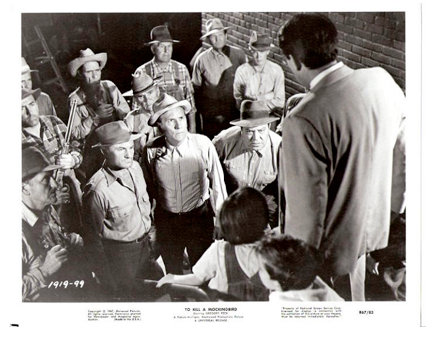
Frank W. Baker offers some great alternatives in a new post, “How to Close Read the Language of Film” on MiddleWeb. Apropos of To Kill a Mockingbird, he suggests offering students two publicity stills from the film and asking students to think about camera angles, clothing, and positioning, all in order to gain insight into the characters, particularly their power and their class position.

In effect, the film stills become stand-alone texts, challenging, rich with meaning and ripe for analysis, but also more inviting and less intimidating for students. Close reading these visual texts empowers students, prepares them for the media challenges we know are ahead of us with the Common Core, and is a richly rewarding exercise in critical thinking.

Imagine beginning your unit on Mockingbird with a discussion of either of the stills Baker suggests, so that even before they start reading, your students have a sense of Atticus’s relationship to the Maycomb community!

We strongly believe in the power and potential of media in the classroom and find Baker’s suggestions and tips really helpful.

Meanwhile, stay tuned for our thoughts on using informational videos to hook your students into complex literary and informational texts!

Tuesday, July 11, 2017

Revamp, recharge your curriculum with Using Informational Text to Teach Literature

Now that it’s July, we hope that your end-of-school-year stress has eased and you are settling into a rejuvenating summer. We know that summer is a precious time that many teachers use to revamp and recharge their curricula and pedagogical toolkit. We think that spending time with our Using Informational Textresources over the summer will be well-rewarded come September. You can also read on our blog about our rewarding experiences with our approach to informational text in the classroom with a wide range of students.

If you are teaching To Kill a Mockingbird and wrestling with how to help your students make sense of it amid today’s conversations about race, economic inequality, and social justice, the first volume in our series, Using Informational Text to Teach To Kill a Mockingbird, can help. Our classroom-ready units on the relationship between Calpurnia and Scout and whether Atticus is a hero will help your students think critically about the characters and the complex world Harper Lee depicts.

If you are teaching A Raisin in the Sun, the second volume in our series will help you underscore the enduring relevance of Lorraine Hansberry’s landmark play. In it, you will find ready-to-use units on housing discrimination past and present, the violence surrounding housing desegregation, the politics of African-American women’s hair, and more.

If you are looking for ways to collaborate with your content-area colleagues around literacy, check out Connecting Across Disciplines: Collaborating with Informational Text. This volume offers practical strategies for initiating cross-disciplinary collaboration and developing students’ disciplinary literacy skills, as well as a sample unit based on a science article and an excerpt from Lord of the Flies.

If you are thinking about how to revamp your curriculum, our website and our blog feature resources and strategies for finding great informational texts that relate to any literary work you may be teaching and using them successfully in your classroom. We also offer ideas for teaching key vocabulary in meaningful and engaging ways and using multimedia together with written informational texts. Check out our sample units based on Mockingbird for models.

If you’d like hands-on training in our approach to using informational text, contact us about scheduling a professional development session in your school or district. We offer half-day and full-day workshops for both English and/or content-area teachers. If you are in New Jersey, we look forward to seeing you at NJEA in November. Otherwise, we hope to see you at NCTE and CEL in St. Louis.

We have just submitted the completed manuscript for our fourth volume, Using Informational Text to Teach The Great Gatsby, which we hope will be available by this fall from Rowman & Littlefield. In the meantime, check out our recent blog posts on articles that highlight both the difficulties and relevance of Fitzgerald’s classic novel.

In anticipation of this new volume, we have also reorganized the resources on our website. You will now find teacher resources and student resources on separate pages. The Teacher Resources page features rubrics, graphic organizers, sample answers, and sample units that you can download and adapt as you wish. The Student Resources page contains all of the graphic organizers that appear in our books so that you can link directly to them from your own class website.

We hope our resources will help you create rewarding learning experiences for you and your students. If you use any of our materials, please send us your feedback. We would also greatly appreciate it if you would post a review on Goodreads or Amazon. Thank you again for your interest and support!

Saturday, August 23, 2014

Using informational videos to engage students in complex texts

If Frank W. Baker helps us think about how useful theatrical visuals can be in teaching the close reading and careful analysis skills critical to understanding literature (like To Kill a Mockingbird), we need to remember that informational videos can be just as helpful as we take on both literary and informational texts in all of our classrooms (not just in language arts).

For example, we used a brief Associated Press clip about Guantanamo Bay from YouTube to remind our young students about the connections between Al Qaeda, Guantanamo Bay, and 9/11 before teaching an editorial (an informational text) by Stephen Jones (published in The Wall Street Journal) about his experience defending Oklahoma City bomber Timothy McVeigh. (Note: If your school or district blocks YouTube, there are browser plugins that allow you to download videos to your desktop. This is a good practice to follow in general; since the video file will already be on your desktop, your lesson won't be at the mercy of any video streaming glitches.)

The editorial, about the importance of good defense for politically unpopular clients, helps students see Atticus’s defense of Tom Robinson in Mockingbird as part of a continuing debate about whether everyone deserves a good lawyer. But while the article provides accessible background about Timothy McVeigh (whom the students haven’t heard of), it assumes background knowledge about Al Qaeda and the Guantanamo defendants (which is only fuzzily present in our students’ brains).

And as with many texts that can seem remote and unexciting, the Jones piece has no obvious hook for students. Why should they care? How can they find an entry point into the text?

We used a quick, engaging clip from the AP (1 minute) about the conviction of Bin Laden’s driver to create that hook and set the stage. After the clip, we asked a few leading questions about the clip. Did they think the driver was guilty of serious terrorism charges or was he just a driver? Did they think he could get fair treatment through the military tribunal system, or did they wonder, as did his defense attorneys, about the issue of a fair trial? Students can be used to watching media passively, so presenting the initial questions to them can be key in getting the discussion going. And sometimes, it’s important to show a video clip more than once (or repeat the clip after you’ve asked the leading questions). It’s easy to forget how much is going on even in a brief media clip, with visuals, various voices, as well as information that’s unfamiliar to our students.

In our lesson, after the brief discussion of the AP clip (about 3 minutes), the students were quick to condemn the driver as guilty and dismissive of the concerns about a fair trial and even legal defense for people like Bin Laden’s driver. The clip and the discussion set the students up to take a stand and they did.

Unlike Baker, our goal with the media clip wasn’t to cultivate close reading and critical analysis. It was to prime the students with some basic information and get them to feel invested in the topic, which was achieved when they took a personal stand.

Once the students had taken their stand, they were set up for success with Jones’s editorial, which argues precisely the opposite point. The informational text, at this point, wasn’t remote and abstract to them. The media clip had allowed them to form an opinion about the issue, and they were ready to read more. And of course, more reading allowed them to refine and reformulate their earlier ideas and to see connections with Mockingbird.

So, use media clips to prime your students with background information and motivation -- especially with challenging informational texts!

Sunday, May 3, 2015

A new resource for teaching Mockingbird

In the year since our first book, Using Informational Text to Teach To Kill a Mockingbird, was published, we have enjoyed the privilege of sharing our work with teachers around the country and have been gratified to play a role in how they are teaching this ever-relevant and beloved novel.

Like so many others, we eagerly await the publication of Harper Lee’s Go Set a Watchman and wonder how it will impact our perceptions of Scout, Atticus, and life in Maycomb, Alabama, and how it will resonate in the present day as Mockingbird still does so powerfully. In the meantime, we welcome a valuable new resource released in April by the nonprofit organization Facing History and Ourselves, Teaching Mockingbird.

Similar to our volume, Teaching Mockingbird is organized into units centered upon essential questions that guide teachers and students as they study the novel in conjunction with related readings and multimedia resources that help students build the background knowledge needed to access the rich themes throughout Mockingbird. Facing History’s guide also contains a wonderful range of video clips and graphic organizers to engage visual and auditory learners (as our volume does as well).

Having spent a great deal of time searching for engaging, meaningful informational texts in creating our own book on Mockingbird, we applaud the choices in Facing History. Three resources in Teaching Mockingbird are particularly fascinating: the discussions of eugenics, the redneck stereotype, and restorative justice.

Teaching Mockingbird aims to be a comprehensive guide to teaching the novel, with extensive thematic and close reading questions for each chapter of the novel, based on Facing History’s pedagogical approach, foregrounding “adolescent and moral development.” The volume offers a very helpful guide to discussing sensitive topics in the classroom and substantive guidance for teachers on how, when, and why to use the resources included. Teaching Mockingbird begins with a rich pre-reading section on identity, difference, personal voice, and belonging and ends with a rewarding post-reading unit that examines the novel’s legacy and the power of literature to shape the morals and ethics of individuals and society.

Like our Using Informational Text to Teach To Kill a Mockingbird, this new volume offers teachers resources to refresh and enrich their existing Mockingbird curriculum by incorporating engaging, complex, relevant informational texts into their teaching of the novel. Both guides emphasize giving students experience with a wide range of meaningful and relevant nonfiction, developing their skills in making evidence-based inferences and arguments, and enhancing their vocabulary and use of academic language.

Of course, we do have some differences in approach. These can be seen most explicitly in how the two volumes present excerpts from Roosevelt’s first inaugural address. Teaching Mockingbird offers a very short excerpt from the beginning of the address with no resources for addressing challenging words like “candor” or “impel.” On the other hand, our book offers teachers a variety of pre-reading vocabulary activities to front-load both key vocabulary and concepts to pave the way for a successful experience of reading, discussing, and writing about a longer excerpt of the address, while guided reading questions alongside the excerpt follow-up on that pre-reading vocabulary practice, asking students to examine how the words are used in the text.

In addition to reinforcing students’ vocabulary acquisition, the guided reading questions that appear directly alongside each informational text in our book draw students’ attention to key textual features and concepts within the text. Each reading is followed by writing and discussion questions that put the informational text into meaningful dialogue with the novel; some units also feature a creative class activity that can be used as a capstone project for the study of the informational text itself or the novel overall.

Our differences reflect our sense that informational text poses specific and substantial challenges to students, particularly in relation to vocabulary and textual features and format. We also want to emphasize the importance of students engaging in rich and evidence-based dialogue as they put these informational texts into conversation with Mockingbird.

Clearly, Teaching Mockingbird, like our UsingInformational Text to Teach Literature, offers teachers and students the opportunity to meet the standards of the Common Core with a range of high quality, complex texts that will invigorate our understanding of this rewarding and relevant novel for years to come. 

Wednesday, April 30, 2014

It's here! It's here!

We are very happy to announce that our first book, Using Informational Text to Teach To Kill a Mockingbird, is now available from Rowman & Littlefield Education! We are grateful to everyone at R&L for helping us share our work with the world and making it look so great!

In this book, you will find the following classroom-ready, student-friendly units, including graphic organizers and rubrics:
Unit 1: What do Americans have to fear?
Franklin Delano Roosevelt: “The Only Thing We Have to Fear Is Fear Itself”
Unit 2: Who’s poor?
Jens Beckert: “Political Structure and Inheritance Law: The Abolition of Entails
Unit 3: Does a girl have to be a lady?
Lillian Eichler: Book of Etiquette
Unit 4: Does everyone deserve a good lawyer?”
Stephen Jones: “The Case for Unpopular Clients”
Unit 5: What is a lynch mob?
Clarence Norris and Sybil D. Washington: The Last of the Scottsboro Boys: An Autobiography / Haywood Patterson and Earl Conrad: Scottsboro Boy
Unit 6: What’s up with Mr. Dolphus Raymond?
Chief Justice Earl Warren, Loving v. Virginia
Unit 7: Is Atticus a hero?
David Margolick, “To Attack A Lawyer In 'To Kill a Mockingbird': An Iconoclast Takes Aim At A Hero”
Here's what Carol Jago and other educators have said about Using Informational Text to Teach To Kill a Mockingbird:

Propelled by rich, probing questions, this book invites teachers and students to explore a classic text with fresh eyes. The authors' approach fosters a disposition for deeper reading and will inspire a sense of wonder in your students.Carol Jago, long time English teacher and past president of the National Council of Teachers of English Using Informational Text to Teach To Kill A Mockingbird is the resource I've been waiting for! Teachers don't have nearly enough time to research informational texts to go along with every unit they teach; therefore this book is going to be perfect for the teacher who wants to take her lessons to the next level. I can't wait to use these lessons in my classroom.Amanda DeAngelo, high school English teacher, Secaucus High School This book (and its website) helps teachers to delve deeply into strategic teaching activities aimed at meeting the Common Core State Standards. Chenelle and Fisch use a wide array of readings with differing levels of complexity to provide "pathways" into engaging explorations of one of the most sacred texts of high school literature, To Kill a Mockingbird. Replete with ideas for evidence-based writing, connections to multimedia web resources, and possible rubrics for evaluating student work, this invaluable guide will not only challenge students to read, write, and think more critically, but will also help teachers "reconceptualize" their teaching to meet the rigorous objectives of the CCSS.Allan A. De Fina, dean of the Deborah Cannon Partridge College of Education and professor of literacy education, New Jersey City University, past president of the New Jersey Reading Association  

Monday, August 10, 2015

Start your school year with success and informational text

We know many of you are already planning exciting new lessons and units, while some of you are already back in the classroom. Either way, our resources can help you start your new school year with success.

IF YOU ARE TEACHING TO KILL A MOCKINGBIRD and wrestling with how to make sense of it alongside Go Set a Watchman, the first volume in our series, Using Informational Text to Teach To Kill a Mockingbird, can help. Our classroom-ready units on the relationship between Calpurnia and Scout and whether Atticus is a hero will help your students think critically about the characters and the complex world of Maycomb that Harper Lee presents in both novels.

IF YOU ARE TEACHING A RAISIN IN THE SUN, the second volume in our series will be available in October and can be pre-ordered now. After the events in Ferguson and Baltimore, this summer’s Supreme Court decision, and recent studies on the persistence of housing discrimination, Lorraine Hansberry’s landmark play is more relevant than ever. Our forthcoming book includes ready-to-use units on housing discrimination past and present, the violence surrounding housing desegregation, the politics of African-American women’s hair, and more. In the meantime, check out our post on the New York Times Learning Network or this New York Times article on housing discrimination in Ferguson.

IF YOU ARE THINKING ABOUT HOW TO REVAMP YOUR CURRICULUM, check out our website and our blog for strategies for finding great informational texts and for setting your students up for successful engagement with them. We also offer ideas for teaching key vocabulary in meaningful and engaging ways and how to use multimedia together with written informational texts in the classroom. Check out our sample units based on Mockingbird, as well as our “Text to Text” feature on Lord of the Flies on the New York Times Learning Network, for models.

IF YOU ARE LOOKING FOR WAYS TO COLLABORATE WITH YOUR CONTENT-AREA COLLEAGUES to develop your students’ disciplinary literacy skills, read our blog posts on collaboration and share our strategies for using high-interest informational texts with a teacher with whom you’d like to work. Our materials can provide the basis for rewarding collaboration among members of your PLC and/or grade-level teams.

IF YOU’D LIKE HANDS-ON TRAINING IN OUR APPROACH TO USING INFORMATIONAL TEXT, contact us about scheduling a professional development session in your school or district. We offer a range of hour-long and day-long workshops for both English and content area teachers. If you are in northern New Jersey, join us at Barnes & Noble in Clifton on October 14, from 4pm-6pm. If you are in Illinois, we hope to see you at IATE in October. Otherwise, you can also find us at NCTE and CEL in Minneapolis in November.

We hope our resources will be helpful to you in getting ready for the new school year. As always, we welcome your feedback!

PRAISE FOR USING INFORMATIONAL TEXT TO TEACH A RAISIN IN THE SUN:
This text takes all the intricacies of the Common Core State Standards and packages them neatly into a format that actually works in a real classroom. With a strong focus on vocabulary building, challenging non-fiction pieces, and digital media to which our secondary students can connect, these units turn A Raisin in the Sun into a cultural, political, analytical learning experience--without taking away the literature. —Meaghan W. Freeman, middle- and high-school English teacher, Willsboro Central School, New York

A reader's understanding of a text is only as comprehensive as the previous experience he or she brings to it. What, then, happens, when the landscape of a reader's life doesn't provide sufficient context? If you feel the impulse to shrug your shoulders and sigh, squelch it. Fisch and Chenelle have created a series of relevant formative activities and assessments to prime the pump for student inquiry. No more flying blind or feeling trapped within the four corners of a text -- students can engage in literature study through a research-informed, "real-world" lens. —Oona Abrams, ELA Teacher, Chatham High School, New Jersey

PRAISE FOR USING INFORMATIONAL TEXT TO TEACH TO KILL A MOCKINGBIRD:
Propelled by rich, probing questions, this book invites teachers and students to explore a classic text with fresh eyes. The authors’ approach fosters a disposition for deeper reading and will inspire a sense of wonder in your students. —Carol Jago, long time English teacher and past president of the National Council of Teachers of English

Using Informational Text to Teach To Kill a Mockingbird is the resource I’ve been waiting for! Teachers don’t have nearly enough time to research informational texts to go along with every unit they teach; therefore this book is going to be perfect for the teacher who wants to take her lessons to the next level. I can’t wait to use these lessons in my classroom. —Amanda DeAngelo, high school English teacher, Secaucus High School